HVAC classes can introduce students to the heating, cooling, ventilation, and refrigeration systems used in homes, businesses, and larger facilities. However, programs can vary in the subjects they cover, the amount of hands-on practice they provide, and the way online and campus-based instruction are combined. Before enrolling, prospective students should look beyond the program title and review how the training is actually structured.
A well-rounded HVAC program should help students understand how electrical components, airflow, refrigerants, controls, ductwork, and mechanical equipment work together. It should also provide opportunities to use tools, take measurements, evaluate system performance, and practice troubleshooting under supervision. Southern Careers Institute’s HVAC diploma program offers one example of how those areas can be organized into a connected course sequence.
Look for a Curriculum That Covers Complete HVAC Systems
An HVAC program should begin with the fundamentals needed to work safely around equipment, electricity, tools, and construction materials. Students need an introduction to workplace safety, personal protective equipment, trade mathematics, measurements, communication, and the proper use of hand and power tools. These subjects provide the foundation for every technical course that follows.
After the basics, students should learn how heating and cooling systems operate. SCI’s HVAC curriculum includes an Introduction to HVAC course that covers electricity, refrigerants, oils, mathematics, and general heating and cooling principles. The Heating and Cooling course then explores air movement, air measurement, and basic system design.
Airflow is an important part of HVAC training because a system can have functioning equipment and still perform poorly when conditioned air does not move correctly. Students should learn how ducts, vents, air handlers, controls, and other components contribute to system performance. SCI includes a Venting and Ducting course that introduces materials and methods used to move air, fumes, and water vapor to and from HVAC systems.
Electrical instruction should also be a substantial part of the curriculum. Modern HVAC equipment depends on motors, compressors, capacitors, transformers, controls, and power distribution. Students need to understand basic electrical concepts before they can approach installation, maintenance, or troubleshooting in an organized way.
A complete curriculum should eventually move into diagnostics and maintenance. Students should learn how to inspect equipment, use meters and monitoring devices, compare observedperformance with expected operation, and follow a step-by-step process. SCI’s program also introduces leak detection, recovery, evacuation, charging, hydronic systems, commercial and industrial equipment, indoor air quality, energy conservation, and system design.
When comparing HVAC classes, request the complete course list. A program that covers only a narrow set of tasks may not provide the same foundation as one that connects electricity, airflow, heating, cooling, ducting, controls, and troubleshooting.
Make Sure Hands-On Practice Is a Major Part of Training
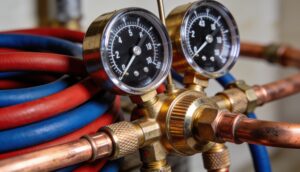
HVAC systems involve physical components that can be difficult to understand through reading alone. Students benefit from seeing equipment, identifying parts, using tools, taking measurements, and following diagnostic procedures in a supervised laboratory.
Ask how many hours are devoted to laboratory practice and what students actually do during that time. SCI’s HVAC diploma program includes 942 clock hours, with 552 theory hours and 390 laboratory hours. The program is estimated to take 36 weeks to complete, although students should confirm current schedules and start dates with their selected campus.
Laboratory instruction should allow students to apply information from their theory classes. After studying electrical concepts, for example, students may practice identifying components or using a meter. After learning about airflow, they may work with ducting materials or evaluate how air moves through a system. After studying diagnostics, they can follow a sequence of checks and explain why each step is being completed.
Students should also receive feedback rather than simply being given access to equipment. An instructor can observe how a student handles tools, takes measurements, interprets results, and approaches a problem. When the student reaches the wrong conclusion, the instructor can help identify where the process changed direction.
Troubleshooting is not usually a matter of guessing which part should be replaced. It requires gathering information and ruling out possible causes. A temperature problem may be connected to airflow, controls, power, refrigerant, equipment condition, or another system issue. HVAC classes should teach students to consider those connections instead of focusing only on the most obvious symptom.
Hands-on learning also reinforces safety. Students may work around electrical components, moving equipment, refrigerants, heat, tools, and construction materials. Following the correct procedure needs to become part of every activity rather than something discussed only during the first week.
Compare Delivery Formats and Student Expectations
Some HVAC programs are offered through traditional campus instruction, while others use a hybrid format. Hybrid training can make part of the theory coursework available online, but students should be cautious of any program suggesting that HVAC can be learned entirely without practical instruction.
SCI lists its HVAC diploma with traditional and hybrid delivery. Online portions may cover theory, while laboratory work requires students to attend the campus. Students participating in online education need dependable internet service, an appropriate computer, a webcam, a microphone, and the required software.
Before enrolling, ask how often students attend the campus, whether online lessons are scheduled or completed asynchronously, how attendance is recorded, and how theory classes connect with the laboratory. A convenient format is useful only when the student understands its expectations and has the time and technology to participate consistently.
Students should also consider the complete weekly commitment. Scheduled classes are only one part of training. Electrical concepts, diagrams, mathematics, system terminology, and troubleshooting procedures may require review outside class. Missing a hands-on session can also be difficult because students may lose access to a demonstration or supervised activity that cannot be recreated at home.
Prospective students should build a plan for transportation, employment, childcare, study time, and technology before classes begin. They should also ask about admissions requirements. At SCI, HVAC applicants complete a criminal-history and employability background check. The school also strongly recommends having a valid state-issued driver’s license because employers may require one.
Evaluate Equipment, Support, and the Overall Program Fit
A campus tour can reveal details that may not appear in a short program description. Ask which tools, meters, system components, and training units students use. Find out how many students share each workstation and whether instructors provide demonstrations before practical activities begin.
Students should also ask what happens when they struggle with a technical concept. HVAC training combines mathematics, electricity, mechanical systems, diagrams, and physical work. A student may understand one area quickly while needing more help in another. Access to instructors, learning resources, and additional explanation can make a meaningful difference.
Program costs should be explained clearly. Ask about tuition, required tools, technology, books or other materials, and any additional expenses. Financial aid may be available to those who qualify, but each student should understand the amount they are responsible for and the conditions attached to their funding.
Career support is another useful consideration when it is described accurately. SCI’s Career Services may assist students with résumé development, interview preparation, and job-search skills. These services can support students as they prepare to pursue opportunities, but training does not guarantee employment or a particular job title.
The right HVAC classes should provide more than a quick introduction to one type of equipment. Look for connected instruction in safety, electricity, heating, cooling, airflow, ducting, controls, diagnostics, maintenance, hydronics, commercial systems, air quality, conservation, and system design. Just as importantly, look for enough supervised practice to help students apply those concepts.
Reviewing the curriculum, laboratory hours, format, equipment, schedule, and support services can help you make a more informed decision. Students interested in SCI can contact Southern Careers Institute to tour a campus, ask about current HVAC schedules, and explore whether the diploma program fits their learning preferences and goals.