
Welding training in Harlingen, Texas, gives students an opportunity to learn a skilled trade through structured classroom instruction and extensive hands-on practice. Welding involves far more than joining two pieces of metal. Students must understand safety, measurements, drawings, material preparation, equipment setup, welding positions, and the methods used to inspect completed work.
Southern Careers Institute offers a Welding diploma program at its Harlingen campus. The program introduces several cutting and welding processes while helping students develop the workplace habits needed in a shop environment. Future students should expect a physically active learning experience that requires concentration, repetition, and a willingness to learn from imperfect results.
Beginning with Safety, Measurements, and Metal Preparation
The program begins with Trade Safety and Construction Basics. Before students work through advanced welding procedures, they need to understand how to protect themselves and the people working nearby. The course covers tool safety, personal protective equipment, material handling, workplace awareness, environmental concerns, posture, loads, signage, and general shop expectations.
Students also study construction mathematics, measurements, symbols, graphics, mechanical drawings, assembly drawings, and fabrication guidelines. These subjects support the practical work that follows. A student may need to measure and mark material, interpret a drawing, identify the type of joint required, or confirm that a piece has been prepared to the correct dimensions before welding begins.
The next part of the curriculum introduces oxy-fuel cutting and welding fundamentals. Students learn basic principles connected to cutting and working with metal while continuing to focus on personal and shop safety. Arc Cutting and Welding Standards expands that foundation with instruction related to structural welding codes, equipment setup, metal preparation, welding materials, electrodes, weld inspection, and quality.
Students are also introduced to air-carbon cutting, plasma arc cutting and gouging, soldering, and brazing. These processes help students understand that metalworking can involve several methods, tools, and applications. A successful result depends on choosing the appropriate process and preparing the work correctly, not simply applying heat.
Developing Skills Through Shop Practice
SCI’s Welding diploma includes 160 theory hours and 540 laboratory hours. This balance gives students substantial time to practice under supervision. Classroom instruction explains safety, processes, drawings, standards, and materials, while the shop gives students a place to apply those concepts.
Shielded Metal Arc Welding, commonly called stick welding, is introduced through courses involving plate, pipe, and groove welds. Students practice in different positions and learn how equipment setup, electrode selection, joint preparation, and body position can affect the result.
Moving from plate to pipe or from one position to another can require adjustments, even when the same general welding process is used.
The program also includes Gas Metal Arc Welding and Flux-Cored Arc Welding on plate and pipe. Students continue working with drawings, standard welding symbols, metals, alloys, and material characteristics. Later, Gas Tungsten Arc Welding introduces TIG welding on plate and pipe, adding another process that requires control, preparation, and attention to detail.
Students should expect their work to be evaluated. A weld that looks acceptable from a distance may still show signs of poor preparation, inconsistent movement, inadequate fusion, or another defect. SCI’s program objectives include diagnosing and correcting common welding defects, so feedback is part of the learning process.
That feedback may require students to slow down, change a setting, adjust their position, prepare the joint again, or repeat the weld. Progress often comes through several attempts rather than one perfect result. Students who remain patient and take correction seriously can use each attempt to build greater consistency.
Shop practice also develops communication and teamwork. Students share equipment, follow instructions, maintain work areas, and work near other people using tools and heat-producing equipment. Clear communication and respect for safety rules help the shop operate more effectively.
Program Format, Schedule, and Student Responsibilities
The SCI Welding program includes 700 clock hours and 43 quarter credits, with an estimated completion time of 27 weeks. Students should contact the Harlingen campus to confirm current class times, start dates, and weekly schedules.
The program is offered through traditional delivery. The catalog notes that some theory classes may be available through asynchronous distance education or traditional instruction, while hands-on application classes are completed in person. Students should therefore plan for regular travel to campus even when a portion of the theory work is available online.SCI lists morning, afternoon, and evening schedule structures for welding and related trades, but availability may vary by campus and start date. Prospective students should ask which shift is currently enrolling and how many hours they will spend in class or the shop each week.
Students also need to prepare for required tools and protective equipment. The catalog identifies a welding tool kit as a separate out-of-pocket expense. Before enrolling, ask what is included in the current kit, whether additional clothing or safety items are required, and when each item must be available. Students may also discuss tuition and financial aid with the appropriate representatives. Financial aid may be available to those who qualify.
Welding training can be physically demanding. Students may spend extended periods standing, holding a steady position, preparing materials, or working near sparks, heat, and equipment. They need to wear required protective equipment and follow safety procedures consistently.
Becoming comfortable in the shop should never lead to ignoring those procedures. Attendance matters because missed laboratory time cannot be fully replaced by reading. A student who misses a demonstration or shop session may lose the chance to practice with a particular process under direct supervision. Reliable transportation and a realistic plan for work, childcare, and other obligations can help students remain consistent.
Visiting SCI’s Harlingen Campus
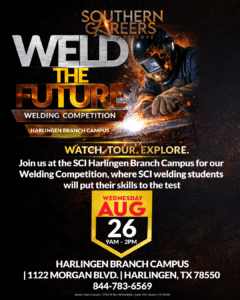
SCI’s Harlingen campus is located at 1122 Morgan Boulevard. A campus visit can help future students see the welding shop, learn how workstations are arranged, and understand what a typical training day may involve.
During a tour, ask how instructors demonstrate welding procedures, how many students share equipment, and how completed work is evaluated. It is also helpful to ask what support is available when a student needs more practice, how online theory sections are managed, and which personal protective equipment is required.
SCI’s Career Services may assist with résumé preparation, interview practice, and job-search skills. The catalog identifies potential entry-level directions connected to fabrication, cutting, soldering, brazing, structural welding, general welding, fitting, and related shop work. Employer requirements vary, and completion of the program does not guarantee employment or a specific position.
Welding training in Harlingen, Texas, may fit students who enjoy practical work, can pay close attention to safety, and are willing to improve through repetition. SCI’s program introduces several welding and cutting processes while also developing measurement, drawing interpretation, communication, inspection, and teamwork skills. Contact Southern Careers Institute to tour the Harlingen campus and decide whether the Welding diploma program matches the kind of hands-on training you want.