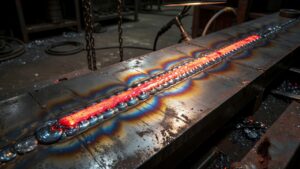
Welding training in Corpus Christi, Texas, gives future students an opportunity to learn through a combination of classroom instruction and extensive shop practice. Welding involves more than creating a visible bead on metal. Students must learn how to prepare materials, read drawings, use tools safely, select a process, position equipment, inspect completed work, and respond when a weld does not meet the expected result.
Southern Careers Institute offers a Welding diploma program at its Corpus Christi campus. The program introduces cutting, brazing, soldering, Shielded Metal Arc Welding, Gas Metal Arc Welding, Flux-Cored Arc Welding, and Gas Tungsten Arc Welding. It is designed to help students build entry-level skills while developing the safety, mathematics, communication, and teamwork habits used in a shop environment.
How the Welding Courses Build on One Another
The first course, Trade Safety and Construction Basics, prepares students for the shop before they begin the more specialized welding classes. Students learn about awareness, tool safety, loads, posture, signage, material handling, environmental concerns, personal protective equipment, and workplace safety guidelines. They also study construction mathematics, measurement systems, symbols, mechanical drawings, assembly drawings, and fabrication guidelines.
This beginning matters because welding depends on preparation. Students may need to interpret dimensions, check the position of a joint, choose equipment, prepare the metal, and understand the drawing before starting. A welding program in Corpus Christi, Texas, should help students recognize that good results begin before the welding arc is established.
The curriculum then introduces oxy-fuel cutting and welding fundamentals. Students explore the basic principles behind cutting and working with metal while continuing to practice shop and personal safety. Arc Cutting and Welding Standards expands the instruction to welding codes, structural standards, equipment setup, metal preparation, electrodes, weld inspection, and quality. Students are also introduced to air-carbon and plasma arc cutting and gouging, along with practical applications of soldering and brazing.
Shielded Metal Arc Welding courses develop skills on plate, pipe, and groove welds. Students complete welds in different positions and practice setting up equipment and materials for the assigned work. The progression gives them multiple opportunities to apply one process under changing conditions rather than completing the same joint repeatedly without variation.Gas Metal Arc Welding and Flux-Cored Arc Welding courses introduce additional equipment and methods on plate and pipe. Students study welding drawings and standard symbols, common ferrous and non-ferrous metals, alloys, hard surfacing, and the correct use of materials. Gas Tungsten Arc Welding, also called TIG welding, adds another process and includes practical instruction with plate and pipe in various positions.
Learning Through Repetition and Evaluation
SCI’s Welding diploma includes 160 theory hours and 540 laboratory hours. This balance reflects the practical nature of the program. Students need enough classroom knowledge to understand safety, materials, codes, symbols, and setup, but they also need time in the shop to turn that information into controlled actions.
During laboratory work, students can prepare metal, set up equipment, practice body position, complete welds, and evaluate the outcome with an instructor. Repetition helps students become more consistent, but simply repeating an error does not lead to improvement. Students need to understand what changed, why a defect appeared, and which adjustment may produce a better result.
SCI’s program objectives include demonstrating cutting procedures and welds to appropriate codes, safely using tools and equipment, and diagnosing and correcting common welding defects. Future students should therefore expect their work to be inspected. Feedback may address preparation, penetration, shape, consistency, position, or another part of the process. The shop environment also teaches habits that are broader than one welding method. Students share space and equipment, follow safety rules, communicate with instructors and classmates, and clean their work areas. They may need to wait for equipment, coordinate a task, or ask for clarification before continuing. Teamwork and clear communication support both learning and safety.
Hands-on application classes are completed through traditional delivery. Certain theory sections may be available through asynchronous distance education or traditional instruction, but welding practice remains campus based. Students exploring welding courses in Corpus Christi, Texas, should plan for dependable transportation and regular in-person attendance.
What to Plan for Before Starting
The Welding program includes 700 clock hours and 43 quarter credits, with an estimated completion time of 27 weeks. Students should speak with the Corpus Christi campus about current start dates, available class times, and the expected weekly schedule.
The program uses tools and equipment connected with metal cutting, joining, brazing, soldering, and arc welding. The catalog references drill presses, electrode holders, oxyacetylene equipment, welding torches, storage ovens, brazing equipment, and TIG welding machines.Students should ask which equipment they will use in each course and how shop access is structured.
A welding tool kit is listed as an out-of-pocket expense separate from tuition. Before enrolling, ask for the current list of required items, the cost, and when each item is needed. Prospective students can also discuss tuition and financial aid with the appropriate representative. Financial aid may be available to those who qualify.
Students should prepare for the physical and mental demands of training. Welding can involve standing, maintaining a steady position, handling materials, working near heat and sparks, and concentrating for extended periods. Safety procedures must remain important even when a student becomes more comfortable.
Study outside the shop may include reviewing symbols, drawings, safety information, terminology, and process steps. Students who approach welding school as only a physical activity may overlook the mathematics and technical information that support the hands-on
work.
Visiting the Corpus Christi Campus
SCI’s Corpus Christi campus is located at 2422 Airline Road. Touring the campus can help students understand the environment before committing to welding training in Corpus Christi, Texas. A visit offers an opportunity to see the shop, learn how practical sessions are organized, and ask questions about instructor feedback.
Future students may want to ask how welds are evaluated, what personal protective equipment is required, how many students use each workstation, and what happens when someone needs additional practice. They should also ask about attendance requirements and how any online theory portions are delivered.
SCI’s Career Services may offer support with résumés, interview preparation, and job-search skills. The program is intended to prepare students for entry-level work related to areas such as fabrication, structural welding, cutting, fitting, soldering, brazing, and general welding. Employer expectations differ, and completing training does not guarantee a position.
Welding training in Corpus Christi, Texas, may be a good fit for students who prefer practical learning and are willing to work carefully through repeated attempts. The program introduces several welding processes while emphasizing safety, material preparation, measurement, drawing interpretation, communication, and inspection. Contact Southern Careers Institute to tour the Corpus Christi campus and explore whether the Welding diploma program matches the skills you want to build