
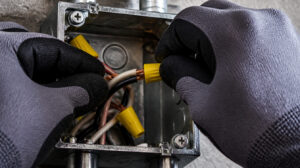
Electrical technician training in San Antonio, Texas, can help students begin developing skills connected to electrical circuits, wiring, motors, controls, distribution systems, lighting, and commercial electrical applications. Training in this field requires more than memorizing where wires connect. Students need to understand electrical theory, interpret diagrams, complete calculations, use tools carefully, and follow safety procedures throughout each project.
Southern Careers Institute offers its Electrical Technician diploma program at the San Antonio North campus. The program combines classroom or online theory instruction with extensive hands-on laboratory work. Students move from construction safety and basic electrical concepts into residential wiring, motors, controls, commercial systems, testing, and troubleshooting.
Exploring the curriculum before enrolling can help prospective students understand how the courses connect and what will be expected during the 27-week program.
How the Program Builds Electrical Knowledge
SCI begins the program with Trade Safety and Construction Basics. Students learn about workplace safety, personal protective equipment, construction mathematics, measurements, communication, tools, and general construction practices. These topics prepare students to approach later electrical projects with greater awareness.
Electrical systems require careful procedures. Students need to inspect the workspace, review the project, select the proper equipment, and verify conditions before beginning. The goal is not to make students afraid of electrical work, but to help them understand why shortcuts and assumptions can create problems.
Electrical Theory and Concepts of Wiring provides a foundation for understanding how circuits operate. Students are introduced to principles involving voltage, current, resistance, loads, and the relationship among components. They also practice using calculations to interpret electrical information.
This theory becomes increasingly important as the curriculum moves into motors and controls. Students study direct-current and alternating-current motors, the systems used to control them, and procedures related to maintenance and troubleshooting. Motors may be part of larger electrical or mechanical systems, so students need to understand how power, controls, and individual components work together.
Training is structured so that earlier courses continue supporting later work. Measurements and mathematics remain relevant when students calculate electrical values. Safety procedures apply when they begin using equipment. Knowledge of circuits supports the work involving motors, panels, controls, and commercial wiring.
Students should expect new vocabulary and diagrams throughout the program. Regular review can help them become more comfortable recognizing symbols, following circuit paths, and explaining how a system should operate.
From Residential Wiring to Commercial Applications
Residential Wiring, Grounding and Bonding introduces students to systems commonly associated with homes and similar structures. They study wiring methods and the processes used to support the safe operation of electrical systems. Laboratory activities give students an opportunity to apply those concepts rather than only examining finished examples.
Grounding and bonding are important parts of the system and need to be understood within the complete installation. Students learn how these measures relate to electrical safety and why connections must follow the appropriate procedures.
Conductors and Electrical Distribution then expands the focus. Students learn about the materials that carry electrical power and the equipment used to distribute it through a system. They work with concepts related to panels and distribution while using knowledge from earlier theory courses.
The curriculum continues into lighting systems and programmable controllers. Students examine lighting components, circuits, and control methods. Programmable controllers introduce systems that use structured instructions to manage electrical equipment or processes.
Electrical Components and Equipment gives students additional familiarity with the devices found in electrical systems. Electrical Calculations and Commercial Wiring connects planning, diagrams, mathematics, and installation procedures with commercial applications. The final course explores additional electrical applications and specialized installations.
Together, these courses expose students to different parts of electrical work without suggesting that completing one short exercise makes someone an expert. Students build a foundation through repeated practice and gradually more complex projects. They may need to return to earlier concepts when working through later assignments.
A commercial wiring project, for example, may require calculations, conductor knowledge, diagram reading, tool use, safe preparation, and an understanding of distribution equipment. The courses are designed to help students connect those elements instead of treating each subject as unrelated information.
What the Hands-On Training Involves
SCI’s Electrical Technician diploma program includes 720 clock hours and 49 quarter credits. Of those hours, 270 are devoted to theory and 450 to laboratory work. The substantial laboratory component gives students opportunities to apply what they study through wiring exercises, electrical equipment, motors, controls, panels, lighting, and simulated construction scenarios.
Hands-on training can make technical concepts easier to understand. A wiring diagram may appear abstract until a student begins identifying the components and building the represented circuit. An electrical measurement becomes more meaningful when the student uses a meter and compares the result with the expected value.
The laboratory also allows instructors to see how students approach a task. The finished project matters, but so does the process. Students may be evaluated on preparation, tool use, connections, testing, safety, organization, and their ability to explain what the system is doing.
When an exercise does not operate correctly, students begin practicing troubleshooting. They review the diagram, inspect connections, take appropriate measurements, and work to identify where actual conditions differ from expected conditions. Randomly moving wires or replacing parts does not build the same understanding as following a structured diagnostic process.Students should expect to make corrections. An instructor may identify an unsafe step, an incorrect connection, or a misunderstanding of the circuit. Correcting the problem and testing the work again helps students connect feedback with an improved result.
SCI lists the program with traditional and hybrid delivery. Some theory courses may be available online, but practical electrical training must be completed in person at the San Antonio North campus. Students completing online coursework need suitable technology, reliable internet, a webcam, a microphone, and the discipline to meet deadlines.
Laboratory attendance is especially important because practical exercises cannot be recreated fully at home. Students should plan for transportation, employment, childcare, and study time before training begins.
Visiting the San Antonio North Campus
The Electrical Technician program in San Antonio is offered at SCI’s San Antonio North campus, located at 6963 NW Loop 410. The San Antonio South campus is a separate SCI location and is not listed as offering this program in the 2026 catalog. Prospective students should confirm the campus when arranging tours, admissions appointments, and transportation.
During a visit, students can see the electrical training environment and ask which motors, controls, panels, lighting systems, tools, and mock construction projects are included. They may also want to ask how laboratory groups are organized, how practical assignments are evaluated, and what help is available when someone needs additional practice with mathematics or theory.
The catalog lists an estimated program length of 27 weeks. Students should ask which shifts are currently offered and how theory and laboratory hours are divided. They should also review attendance policies and the amount of work expected outside scheduled instruction.
Applicants must sign a release for a criminal-history and employability background check. SCI strongly recommends that Electrical Technician students have a valid state-issued driver’s license because it may be required by employers. Employer requirements vary, and the program does not guarantee a position.
Students should also ask about the required Electrical Technician tool kit, which is listed as an expense separate from tuition. Financial aid may be available to those who qualify. Career Services may help students with résumés, interview preparation, and job-search skills, but employment is not guaranteed.
Electrical technician training in San Antonio, Texas, may appeal to students who enjoy working with tools, solving structured problems, and understanding how circuits and components interact. SCI’s program combines safety, theory, calculations, residential wiring, motors, controls, grounding, distribution, lighting, commercial wiring, and troubleshooting. ContactSouthern Careers Institute to explore the San Antonio North campus and decide whether the Electrical Technician diploma program fits your goals.