
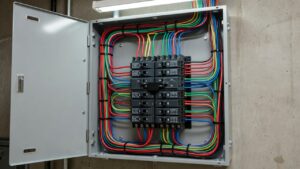
Electrical Technician training and HVAC training both involve tools, wiring, safety procedures, measurements, and hands-on problem-solving. However, they prepare students to work with different systems and require different combinations of technical knowledge.
Electrical Technician training focuses on circuits, wiring, motors, controls, distribution panels, lighting, commercial applications, testing, and electrical equipment. HVAC training includes electricity too, but applies it within heating, cooling, ventilation, refrigeration, airflow, ducting, and temperature-control systems. Comparing the course content, laboratory experience, program length, and type of problem-solving involved can help students choose a path that fits their interests.
Comparing the Technical Subjects
SCI’s Electrical Technician program begins with trade safety, construction basics, mathematics, tools, and communication. Students then study electrical theory and wiring concepts, including voltage, current, resistance, circuits, conductors, diagrams, and related calculations.
The curriculum moves into AC and DC motors, controls, maintenance, and troubleshooting. Students also study residential wiring, grounding, bonding, electrical distribution, lighting systems, programmable controllers, electrical components, commercial wiring, and specialized installations. The goal is to help students understand how electrical systems are installed, operated, tested, maintained, and repaired.
Electrical students spend considerable time working with diagrams and circuits. They need to understand how electricity should move through a system and how components affect one another. When an exercise does not operate correctly, they may need to inspect connections,take measurements, compare the findings with the diagram, and identify where actual conditions differ from the expected result.
SCI’s HVAC program also begins with trade safety and construction basics, followed by heating and cooling principles, trade mathematics, electricity, refrigerants, oils, air movement, and system design. Students learn about ducting, HVAC electrical components, diagnostics, maintenance, hydronics, troubleshooting, commercial and industrial systems, air quality, energy conservation, and system construction.
HVAC students use electrical knowledge, but electricity is one part of a larger mechanical system. A heating or cooling concern could involve a motor, control, airflow restriction, ducting issue, pressure, equipment condition, or another connected factor. Students learn to consider how several systems interact.
Both programs include electrical concepts. Electrical Technician training studies electrical systems as the central subject, while HVAC applies that knowledge alongside airflow, heating, cooling, ventilation, and refrigeration.
How the Laboratory Experience May Feel
SCI’s Electrical Technician diploma includes 720 clock hours, with 270 theory hours and 450 laboratory hours. The estimated completion time is 27 weeks. The amount of laboratory time gives students opportunities to work with wiring, motors, controls, panels, lighting, conductors, and mock construction situations.
An electrical laboratory exercise may involve following a diagram, selecting materials, making connections, testing the circuit, and correcting the work when it does not operate as intended. Instructors can evaluate both the finished result and the process used to reach it. Safety, organization, measurements, code-related instruction, and tool use remain important throughout the project.
A circuit diagram provides a plan, and measurements can help identify where a problem exists. A small connection or misunderstood symbol can still affect the entire exercise.
SCI’s HVAC diploma includes 942 clock hours, with 552 theory hours and 390 laboratory hours. It is estimated to take 36 weeks. The larger theory portion reflects the range of subjects students need to connect when evaluating heating, cooling, and ventilation equipment.
HVAC laboratory work may include electrical components, controls, meters, ducting materials, system parts, airflow, and diagnostic procedures. Students may begin with a reported symptom rather than a visible wiring error. They need to inspect the system, gather measurements, and decide which possibility should be checked next.
Someone who prefers building and testing circuits may lean toward Electrical Technician training. Someone who likes examining a complete mechanical system and tracing aperformance problem may prefer HVAC. Both paths require careful tool use and a willingness to accept feedback.
Electrical training may involve wiring mock-ups, panels, motors, and lighting systems. HVAC training may include ducting, heating and cooling units, controls, and diagnostic equipment. A campus tour can help students see which environment feels more interesting.
Comparing Program Length, Format, and Requirements
SCI lists the Electrical Technician program at an estimated 27 weeks and the HVAC program at an estimated 36 weeks. HVAC includes more total hours and more theory because it covers electrical, mechanical, airflow, refrigeration, and system-design subjects. Electrical Technician training spends a larger percentage of its hours in the laboratory while concentrating more narrowly on electrical systems and applications.
Both programs may include online theory depending on the campus and current delivery format, but hands-on work must be completed in person. Students need reliable transportation and enough time to attend laboratory sessions consistently. Online instruction still requires access to a suitable computer, dependable internet, and regular participation.
Prospective students should ask which campuses offer each program and which shifts are currently available. They should also review attendance policies, required equipment, and costs beyond tuition. SCI identifies an Electrical Technician tool kit as a separate student expense.
HVAC students should ask whether tools, technology, clothing, or other materials are needed for their start. Financial aid may be available to those who qualify. Both programs have program-specific admissions considerations. Applicants should speak with an admissions representative about the required background-check process and other current requirements. SCI also strongly recommends that students in these programs have a valid state-issued driver’s license because employers may require one.
Students should plan for study outside scheduled classes. Electrical theory, diagrams, calculations, and code-related instruction may require review. HVAC students may need to study electricity, refrigerants, airflow, hydronics, diagrams, controls, and diagnostic sequences. Hands-on programs still involve reading, mathematics, and technical vocabulary.
Choosing Between Electrical Technician and HVAC Training
Electrical Technician training may fit someone who wants electricity to be the main subject. Students who enjoy circuits, wiring diagrams, motors, controls, panels, lighting, and precise connections may find the coursework engaging. The path asks students to combine calculations and theory with detailed installation and troubleshooting exercises.HVAC training may fit someone who wants to work with a broader combination of electrical and mechanical concepts. Students interested in temperature control, airflow, ducting, heating, cooling, system performance, and diagnostic work may prefer this curriculum. The problems can require several types of information before the cause becomes clear.
Your preferred problem-solving style can help guide the decision. Electrical exercises often begin with a defined circuit or installation and require students to make the system operate according to the plan. HVAC troubleshooting may begin with a symptom and require students to investigate multiple connected systems. Neither approach is automatically simpler.
Do wiring, panels, controls, and electrical diagrams hold your attention? Or are you more interested in heating and cooling equipment, airflow, ductwork, and full-system diagnostics? The best choice is the program whose daily subjects make you want to keep practicing.
SCI’s Career Services may help students with résumé development, interview preparation, and job-search skills, but completing either program does not guarantee employment. Contact Southern Careers Institute to compare the current Electrical Technician and HVAC offerings, tour the training environments, and decide which trade program better fits your goals.